
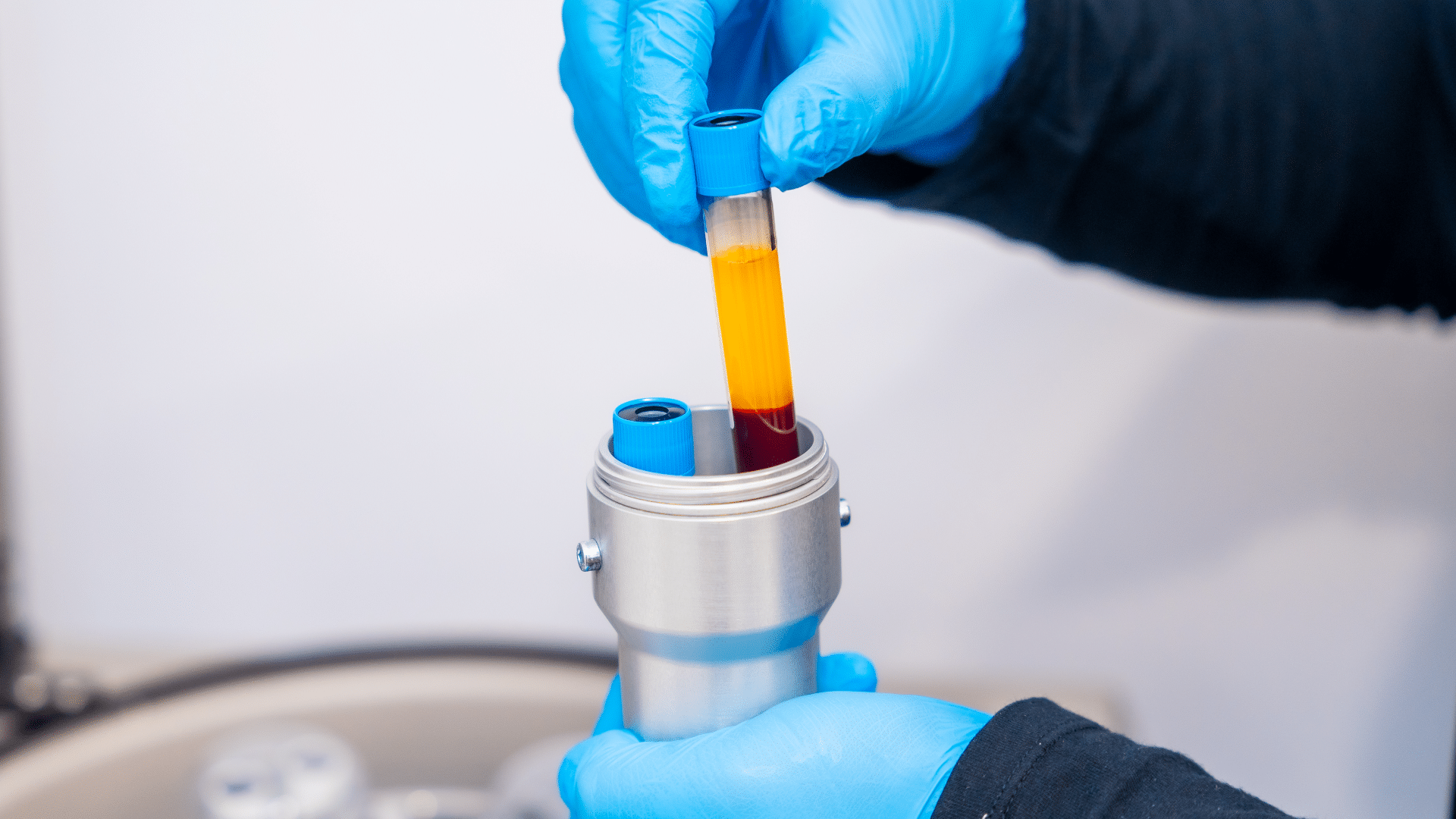
What is PRP Therapy for Fertility?
Implantation failure is one of the major challenges in fertility treatment and a receptive endometrium plays a key role in successful implantation and pregnancy.
Platelet-Rich Plasma (PRP) therapy is used to help improve the uterine lining (endometrial) thickness and/or the endometrial receptivity to improve pregnancy outcomes. PRP Treatment may be recommended for patients who have experienced recurrent implantation failure over multiple IVF cycles or those with a persistently thin endometrium.
Book an Initial Consultation
Request an appointment with one of our specialists.
How Does Platelet-Rich Plasma Help in Fertility?
Platelet-Rich Plasma (PRP) therapy uses a concentration of your own platelets, rich in growth factors and proteins—to support the regeneration and repair of tissues. In fertility treatment, platelet rich plasma is introduced into the uterus to improve the endometrial lining, making it thicker and more receptive for embryo implantation. A fertility specialist may recommend this for patients with a thin endometrium, patients with repeated implantation failure, or multiple unsuccessful IVF cycles and patients with surgically treated Asherman’s syndrome.
Why Choose City Fertility for Your PRP Therapy?
PRP fertility treatment is a specialised fertility treatment that requires expertise and precision. City Fertility is one of a few clinics in Australia offering PRP reflecting our commitment to innovation and excellence in fertility care. It is an emerging adjunctive therapy and not offered at all City Fertility clinics. To discuss your options, please make an appointment to speak to one of our fertility specialists.
Who Can Benefit from PRP Fertility Treatment?
Your fertility specialist may recommend PRP therapy.
- Patients with thin endometrium, who cannot obtain the desired level of endometrial thickness for successful embryo transfer?
- Patients who have had 2 or more failed IVF cycles
- Patients who have had recurrent implantation failure of unknown cause
- Patients with surgically treated Asherman’s syndrome
Who is not suitable for PRP?
- Patients over 45 years
- Patients with a BMI over 35
PRP Treatment Process: What to Expect
For those with recurrent implantation failure, PRP treatment is used to improve the receptivity of the endometrium prior to an embryo transfer and is usually performed 48 to 72 hours prior to a scheduled embryo transfer. For those with thin endometrium, PRP treatment is used to thicken the endometrium to beyond 6mm and requires two to three treatments four to five days apart.
The patient’s own blood plasma enriched with platelets is inserted into the uterine cavity, flushing the uterus with highly concentrated platelets (4-5 times more than circulating blood). Platelets contain multiple growth factors that are thought to play a key role in tissue regeneration, activation of cell growth and cellular renewal. When highly concentrated platelets are administered into the uterine cavity, they ‘activate’ and produce an inflammatory response, increasing blood flow and healing factors in the surrounding tissue.
The PRP Process
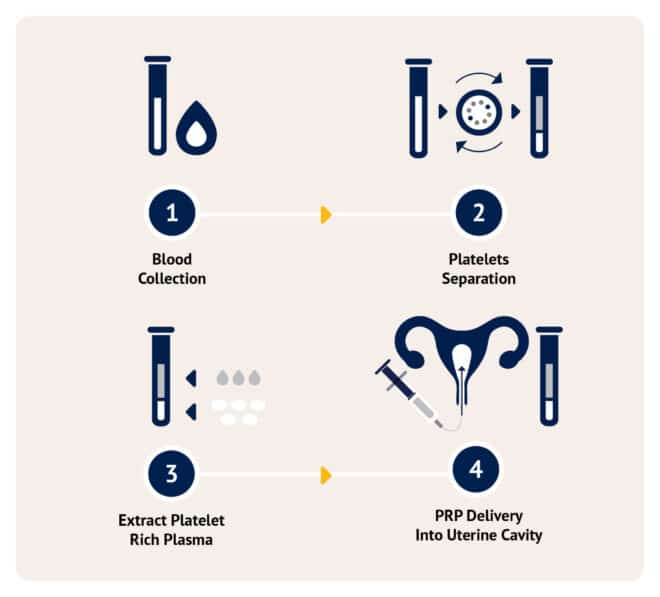
- Step 1: The PRP process starts with a healthcare professional drawing a sample of blood from the patient, just like you would normally experience when having a blood test.
- Step 2: The blood is centrifuged, meaning it is spun very quickly. This causes the different components of blood, plasma and platelets to separate.
- Step 3: The clinician or nurse assisting collects the plasma (now rich in platelets, and devoid of cellular components) in preparation for its administration into the uterine cavity.
- Step 4: Approximately 1ml is administered into the uterine cavity using a very thin catheter – similar to having an intrauterine insemination (IUI). The patient rests for 10 -15 minutes and can then resume normal daily activity. The entire process should take approximately 45 minutes.
Safety and Risks of PRP Fertility Treatment
PRP is a safe, quick and straightforward procedure. There is a an extremely small risk of developing an infection. Antibiotics are rarely needed. It is also important to know that only your own blood is used for PRP fertility treatment so there are no concerns with plasma rejection or adverse reactions.