
By Dr Andrew Zuschmann, specialist at City Fertility Sydney Miranda
When women undertake an IVF cycle, the aim is to retrieve as many good-quality eggs as possible to optimise the chance of a successful pregnancy.
The theory behind this is that IVF can be a physically and emotionally challenging process, and doctors do not want to put patients through excessive cycles if they can help it. The facts are also that not every stimulated follicle will contain an egg, and not every egg will fertilise. Furthermore, not every fertilised egg will go on to form a good-quality embryo.
Why Not Transfer all Embryos?
An IVF cycle may result in one or several good-quality embryos. However, transferring all the good-quality embryos at once can result in two or more implanting and hence a multiple birth, which places the mother and baby at a significantly greater risk. The standard now is to transfer only one embryo, and in special cases two.
So, what happens with the spare embryos? The answer is to freeze them so that if the first embryo transfer fails, the patient has another chance at pregnancy success without having to go through a full IVF cycle.
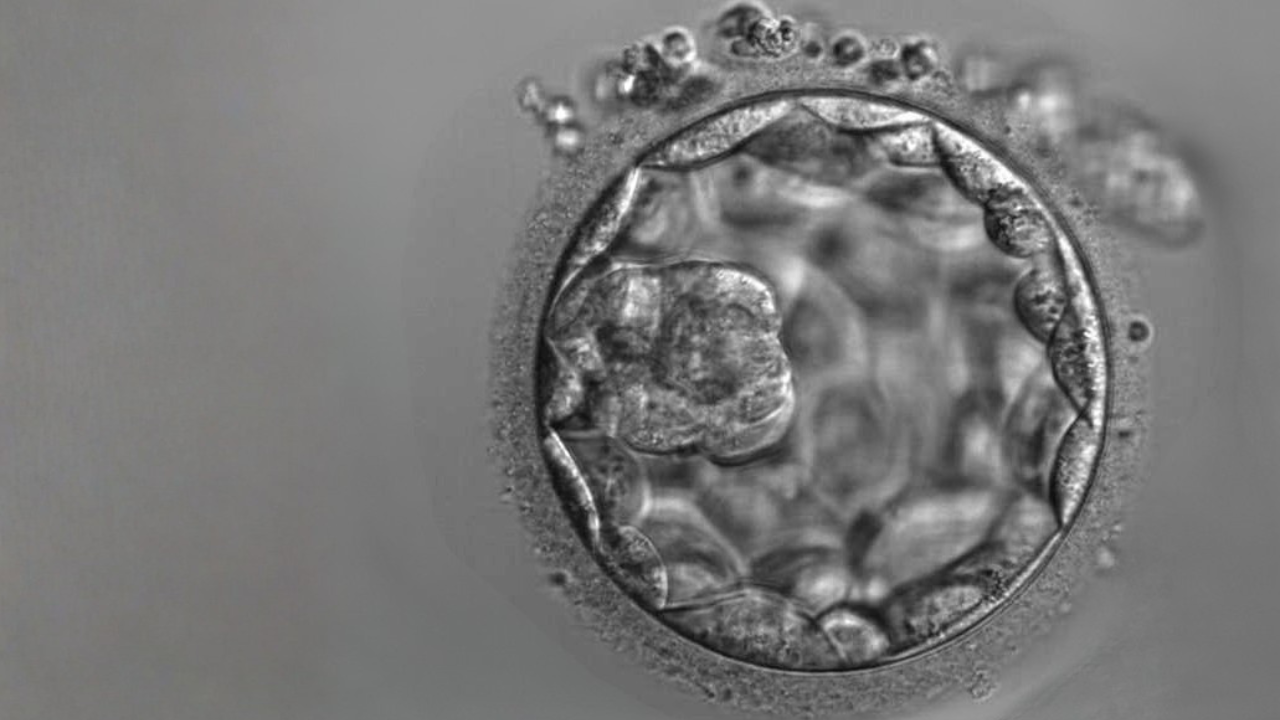
Following the fresh embryo transfer, the remaining embryos are checked to see if they are suitable for vitrification (rapid freezing). To be suitable, the embryos must be of similar quality to the embryo transferred and not show any signs of abnormal development or fragmentation (cell breakdown).
How are Embryos Frozen?
Vitrification is a rapid technique used for freezing embryos that resulted in a dramatic increase in pregnancy rates when first introduced due to the improved recovery and survival rate of frozen embryos.
Embryos are taken through a stepwise process that reduces the amount of water in each cell. They are then frozen in a tiny volume of fluid on a specialised device which, when placed in liquid nitrogen, is frozen instantly. The freezing is so rapid that there is no time for damaging ice crystals to form in the cells, thus resulting in much better cell survival and improved implantation potential.
A typical embryo vitrification protocol is complete in less than 10 minutes. The frozen embryos are then placed in a large storage vessel, full of liquid nitrogen.
One of the benefits of frozen embryos is that they do not age. For example, if you freeze an embryo at the age of 30 and decide to thaw and use it at age 35, the cell structure and quality of the embryo remain as they were when you were 30 years old.
How are Embryos Thawed and Transferred?
The process for thawing an embryo is very simple. A step-wise process gently replaces the water that was removed during vitrification back into each cell, rehydrating the embryo and allowing it to recover to its previous state and resume development. The process of warming takes approximately 15 minutes
Preparation for a frozen embryo transfer (FET) is a lot easier than a fresh embryo transfer, as it does not involve any stimulation of the ovaries. FET is all about timing – your clinician will ensure the transfer takes place at the optimal time, when your uterus is most receptive to your embryo. This is usually done by performing scans to measure your uterine lining to ensure the correct thickness. Blood tests or medication may or may not be required, depending on the type of treatment cycle your doctor has determined is most appropriate for you.
The actual embryo transfer procedure is the same as a fresh transfer and does not routinely require sedation or pain relief.
What Happens to the Additional Embryos?
Embryos can be stored frozen indefinitely without affecting their quality or ability to recover after thawing. Some states in Australia do have laws that limit storage periods, so please check with your clinic to confirm which laws apply to your embryo storage. Storage fees are charged at regular intervals.
If you do decide to cease storing your embryos, you may decide to dispose of your embryos. You can choose to have the laboratory staff take care of this for you, or you may decide to collect them after removal from storage.
Another option is to donate your additional embryos to others in need of one. For more information on your options for your embryos, please contact your City Fertility clinic.